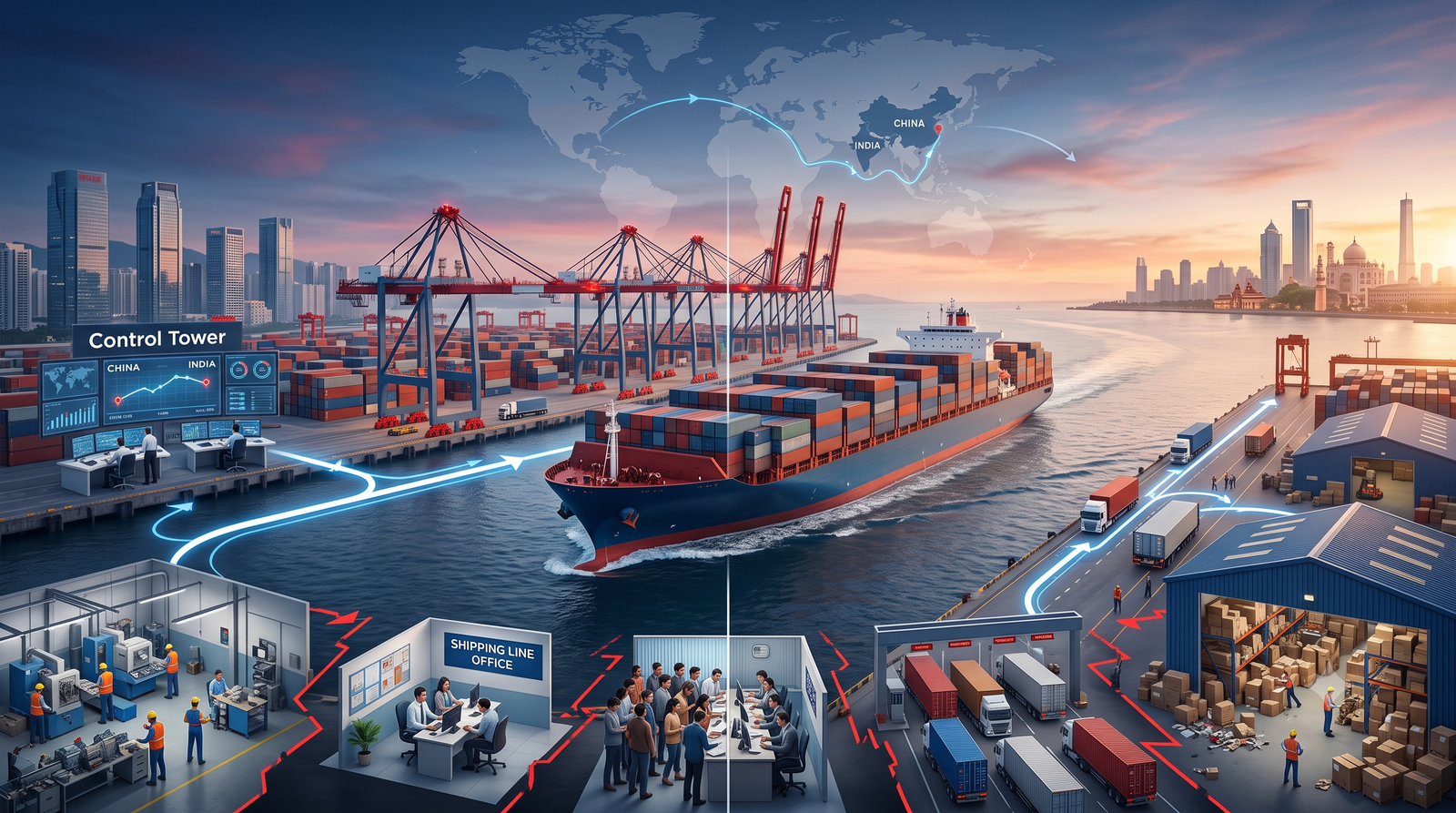
If you're importing goods from China to India, one of the first decisions you'll face is how those goods actually get from a factory in Guangzhou or Yiwu to your warehouse in Delhi, Mumbai, or Chennai. Broadly, you have two paths: work with a freight forwarder, or arrange direct shipping yourself. The choice affects your cost, your paperwork, your risk, and honestly, your peace of mind.
Here's a clear breakdown to help you decide.
What Is Direct Shipping?
Direct shipping means you (or your supplier) book cargo space directly with a shipping line or airline, and you personally manage everything else — customs clearance, documentation, port handling, inland transport, and delivery to your final location.
Pros:
- Potentially lower base freight cost, since you're cutting out an intermediary
- Full visibility and control over every step, if you have the expertise to use it
- Works well for large, experienced importers with in-house logistics teams
Cons:
- You need to independently manage customs documentation on both the Chinese export side and the Indian import side
- No single point of contact if something goes wrong mid-shipment
- Container consolidation (LCL — Less than Container Load) is hard to arrange on your own
- Time-consuming, especially for first-time or occasional importers
- Higher risk of costly errors: wrong HS codes, missing paperwork, customs delays, demurrage charges
What Is Freight Forwarding?
A freight forwarder acts as your logistics partner. They don't own the ships or planes, but they manage the entire shipping process on your behalf — booking cargo space, consolidating shipments, handling export and import documentation, coordinating customs clearance, and arranging last-mile delivery.
Pros:
- One point of contact for the entire shipment, from pickup in China to delivery in India
- Expertise in Indian customs procedures, HS code classification, and required documentation (Bill of Lading, Commercial Invoice, Packing List, IEC, Bill of Entry, etc.)
- Access to consolidated LCL shipments, ideal for smaller or first-time orders
- Better rates through bulk carrier relationships, often offsetting the service fee
- Real-time tracking, proactive problem-solving, and support if goods are delayed or held at customs
- Reduced risk of compliance errors that can lead to fines or seized shipments
Cons:
- A service fee is added on top of freight costs
- You're relying on a third party's reliability and communication
Which Is Better for Indian Importers?
For most businesses importing from China into India, freight forwarding is the more practical and cost-effective choice — and here's why it matters specifically in this trade lane:
1.Indian customs is document-heavy. Errors in HS codes, invoice mismatches, or missing certificates can hold your shipment at port for days, racking up demurrage charges that quickly outweigh any savings from going direct.
2.Smaller order volumes are common. Many Indian importers, especially SMEs and D2C brands, don't have enough volume to fill a full container. Forwarders consolidate shipments (LCL), so you only pay for the space you use.
3.China's export process has its own complexity. Coordinating pickup, export customs, and port handling in China while sitting in India is far easier with a forwarder who already has boots on the ground.
4.Predictability matters more than marginal savings. A missed delivery window or a customs hold can disrupt your entire supply chain. Forwarders exist specifically to catch these problems before they become expensive.
Direct shipping makes sense if you're a high-volume importer with dedicated logistics staff, established customs brokers, and enough container volume to justify managing every leg yourself.
For everyone else — first-time importers, growing businesses, and anyone who wants fewer surprises — a trusted freight forwarding partner is worth the fee.
The Bottom Line
Shipping from China to India isn't just about moving boxes — it's about navigating customs regulations, documentation, and logistics coordination across two countries. A good freight forwarder doesn't just move your cargo; they protect your timeline, your budget, and your compliance.
Why Import Through Pree Import Export Co.?
We built Pree specifically to take the uncertainty out of China-to-India trade. When you ship with us, you get:
- End-to-end handling — sourcing coordination, freight booking, customs clearance, and last-mile delivery, all under one roof
- Deep expertise in Indian customs — accurate HS code classification and complete documentation, so your shipments clear without costly delays
- Flexible shipment sizes — full container loads or consolidated LCL shipments, so growing businesses aren't priced out
- A dedicated point of contact — real-time updates and a team that steps in the moment something needs attention
- Transparent, predictable pricing — no hidden charges buried in customs paperwork
Whether you're placing your first import order or scaling up a regular supply chain from China, our team manages the journey so you don't have to learn it the hard way.
Your trust, delivered, every time.
---
Ready to import from China with confidence? Get in touch with the Pree Import Export Co. team for a free customs and freight consultation.

